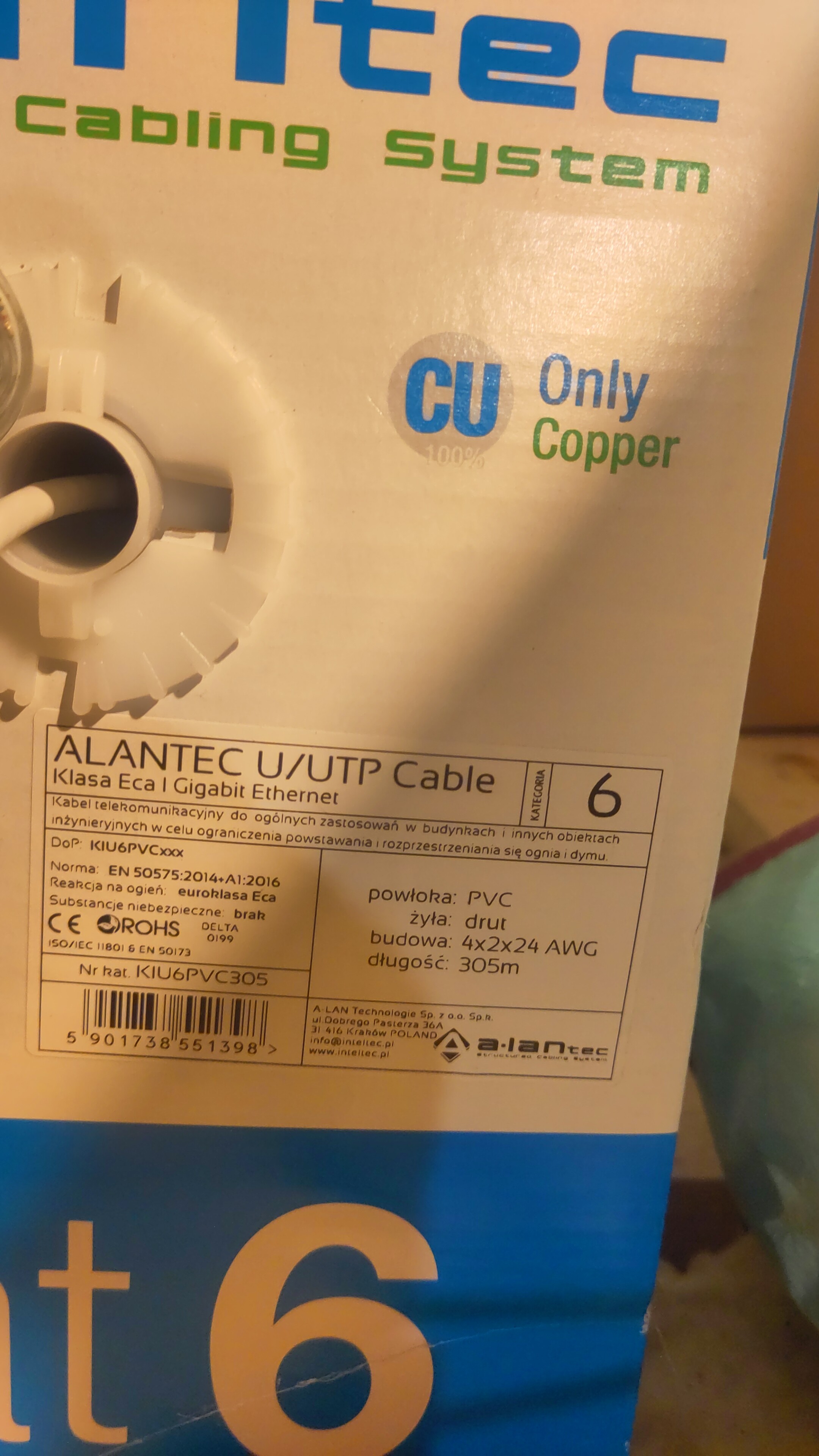
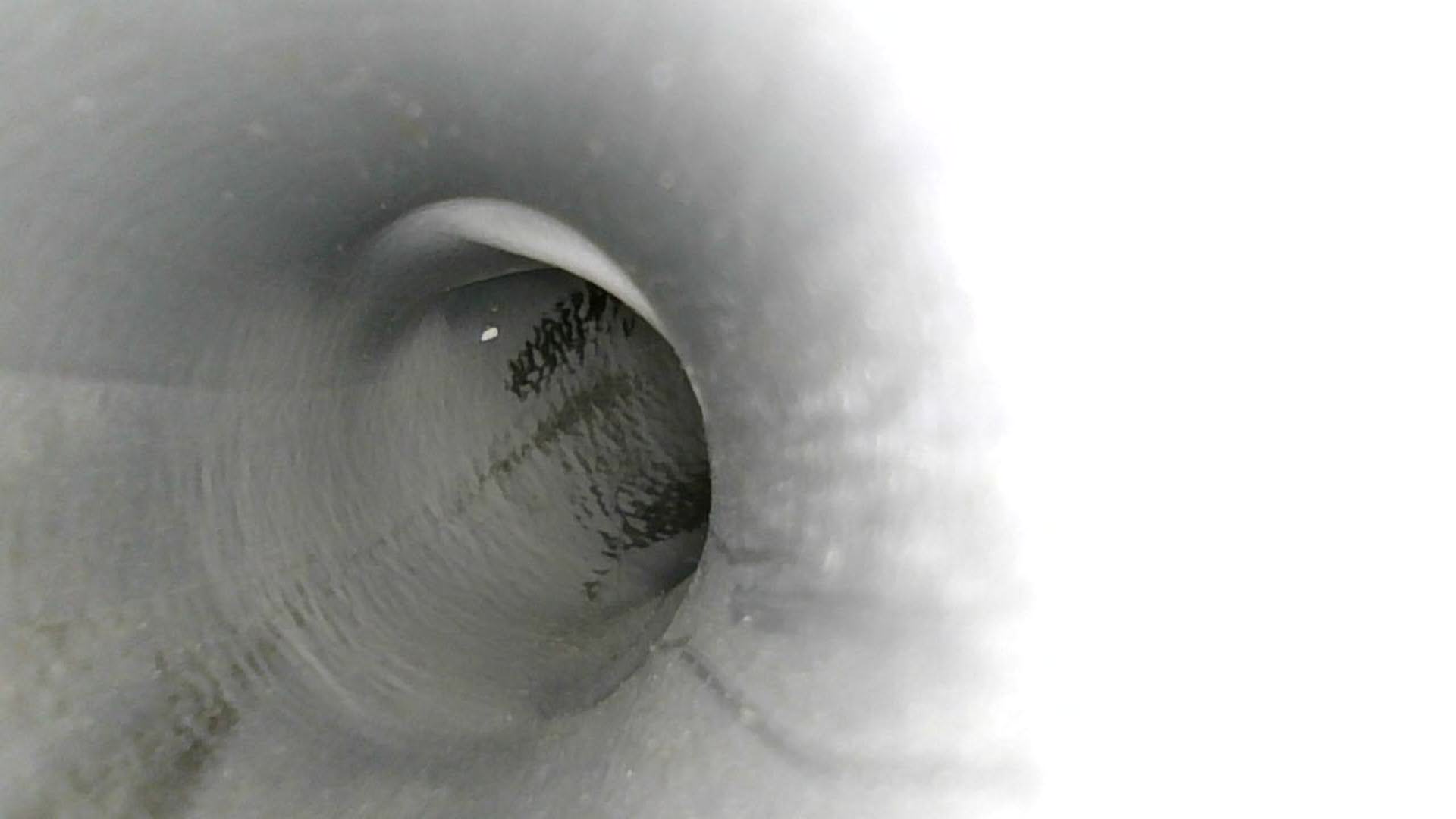
Yes i know it sounds stupid but im out of ideas at this point. Situation is the builders bent a pipe in 2 places when installing in the brick walls. I want 4 plugs in that room so thats 4 cables, which barely fit inside it if i tie them together with electrical tape in a rounded square shape, this is how the 1st bend looks like shoving up the endoscope from the room:
Yep no way in hell that bundle will make it through that. The run itself is ~15m long (20m worst case) and im thinking on stripping the outer plastic jacket and separator from the pairs and bundle them up per cable then together for the 2-2,5m portion that will be inside the wall.
How badly would this affect speed and the future possibility of 10gig?
Might worth a try, i have my doubts though because its already a tight fit even without the 2 kinks in the pipe (uploaded only 1 image but as i said there are 2 bends on it)…..
Ill have to ask around in the local electrical stores, im not in the US and a “home user” not a company so i dont need that much.
Tried both ways, not at the same time though because im alone. Havent thought about converters because i already have the recesses in the walls for rj45 and i doubt there are converters that would fit that small hole, plus im on a tight budget (probably will be for the foreseeable future)….
Cable lube might be your only choice, and being by yourself isn’t going to help. The lube I’ve used is in a squeeze bottle, one person squeezes it on while the other pulls cable with a string. It’s pretty cheap over here, and you can get it at most building supply type stores.
One thing that might help is offsetting 2 of the cables. Pair up two of them with a foot or more of space, then add the second pair. This might help get around the bends by easing the bundle through the restriction. It’s a maybe.
I don’t think stripping the outer jacket is a good idea for possible 10g speeds, not even sure I like it for gigabit.
Yeah ill look around, im night shift this week so might take a while, and ill have to go back up in the attic to check if i even have enough slack to stagger the wires.
Just a side note how bad are those thin(/slim) ethernet cables? Might have better chances if i replace 2 cables with those then tie them to the original cable in the attic.
From ChatGPT: The run length of slim Ethernet cables (28–30 AWG) is much shorter than standard Ethernet because the thinner conductors have higher electrical resistance and more signal loss.
Here are the practical, engineering-based limits:
Maximum Recommended Run Lengths
28 AWG slim Ethernet
Up to ~15–20 meters (50–65 ft) for full-speed 1 Gbps
Up to ~10–15 meters for 2.5 / 5 Gbps
Often <10 meters for 10 Gbps unless high-quality, short patch use
30 AWG slim Ethernet
Up to ~10–15 meters for 1 Gbps
<10 meters recommended for multi-gig (2.5/5/10G)
Not appropriate for structured cabling runs
PoE and slim cables
If using PoE:
28 AWG is okay for low-power PoE on short runs
30 AWG is not recommended for PoE beyond very short patch cables
Heat buildup increases attenuation and shortens cable life
Real-world usage guideline
Use slim cable for:
Patch cables (<10 m)
Rack cable management
Short device-to-wall runs
No high-power PoE
Use standard 23–24 AWG for:
Anything approaching 30+ meters
In-wall runs
Multi-gig speeds over distance
PoE cameras, APs, etc.
I asked for info for a 20M run length:
For a 20-meter run through a conduit, here’s the straight, practical answer:
Use standard 23–24 AWG Ethernet — NOT slim cable — for 20 meters
A 20 m run is right at or beyond the reliable limit for slim cables (28–30 AWG). Slim cables are intended for short patch leads, not long structured runs, and they suffer from:
Higher attenuation
Worse performance at multi-gig speeds
More heat buildup (especially in conduit)
Much higher failure risk over time
Conduit makes this even more problematic because heat can’t dissipate well and pulling tension may damage thin conductors.
Can you only run 2-3 cables and add a switch in the room for more access?
Also, what cable could you barely fit 4 of? Some brands of Cat 6 and most Cat 5e will have a thinner jacket and no spline in the middle, which reduces the diameter.
This. Either run fiber, add a switch in the room. If you strip off the outer jacket, it is no longer Cat 6 cable. You could allow twist rate of the individual pairs to change as well as well as changing the alignment of the pairs relative to each other. This will degrade performance.
I do not want extra vampires thats why i asked for 2 extra recesses in the wall in almost every room. The builders did that partz reliably except for this one headache……
You can get fiber LC feed through for Keystones type panels, not a real issue if that’s what you need.
I’d pull one to get a length, then cut all four, then stagger the ends so that it might go around the bend. But it’s going to be tight! I’ve run four slightly larger through 1 inch conduit, it was very difficult in some areas. But do not try and put all the ends together to form a single inflexible mass on the end of a fish tape or pull cord.
The real issue is money, of which i dont really have much for stuff like this. Ill try my luck with replacing 2 cables with the thinner variant(havent ordered yet, IDK when). Having 2 connections limited to 1g is an acceptable compromise.
/edit 2025-12-22
Ordered 2 pre-terminated thin cables, ill just snip one and will see if it will work or not…..

 Real-world usage guideline
 If you